


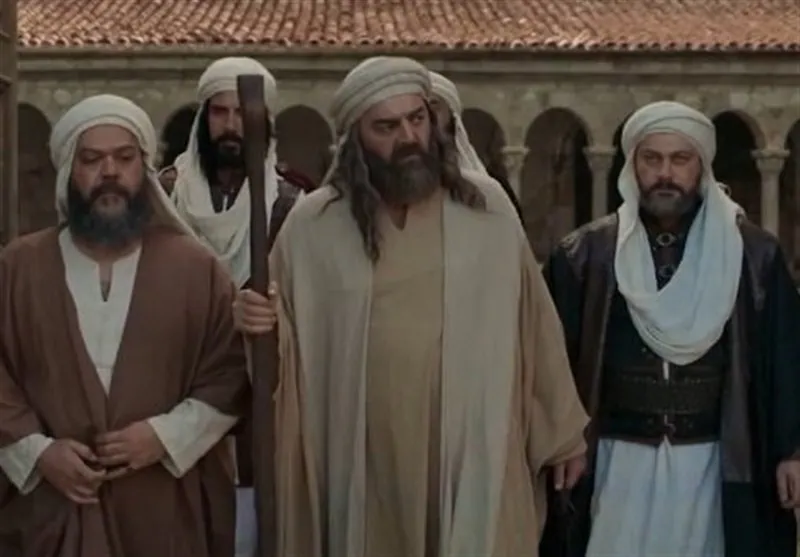
The broadcast of the series Muawiyah on Saudi Arabia’s MBC network during the holy month of Ramadan, along with the growing wave of reactions, has demonstrated that ideological rivalries have now reached a new level. The series Muawiyah, one of the most expensive productions in the Arab world with a budget exceeding one hundred million dollars, has sparked diverse reactions across Islamic countries.
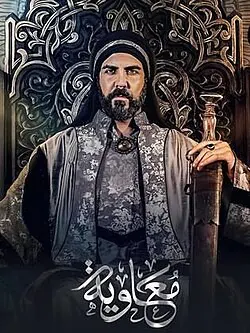
?Who Is the Creator of the Series Muawiyah
The writer of the series is Khaled Salah, an Egyptian journalist, and its director is Tariq Al-Arian, a Palestinian-American.
The series Muawiyah narrates the life of Muawiyah ibn Abu Sufyan, who established the Umayyad rule in Damascus.
It is reported that this 30-episode series portrays the period from the transfer of the caliphate by Imam Hasan al-Mujtaba (the second Shia Imam) to Muawiyah, and the events that followed, up to the rise of Yazid (Muawiyah’s son).
Following its broadcast on Saudi Arabia’s MBC network, countries such as Iran and Iraq banned the series, while in Egypt it faced severe criticism from historians and scholars.
One of the most important points in analyzing this series is the diverse reactions of audiences across different social groups on social media. These reactions can be categorized into three main types:
Religious Reaction
Most of these reactions relate to the biases of Shia and Sunni viewers. According to Shia and many Sunni perspectives, the series attempts to whitewash Muawiyah’s image. In contrast, reliable Sunni and Shia sources depict Muawiyah as a political figure who, to consolidate his rule, engaged in unethical actions and widespread brutal killings. However, the series makes no reference to the darker aspects of Muawiyah’s character or those of his associates.
2. Geopolitical Narratives About Muawiyah:
Some of the controversial analyses focus on interpreting the series within the regional balance of power. Analysts in this group argue that the series serves as a form of civilizational symbolism to strengthen Saudi Arabia’s political discourse. Considering the influence of Shia thought in the region, often associated with the justice and martyrdom of Ali ibn Abi Talib, Saudi Arabia seeks to appear as a rival authority. To assert its presence, it draws upon historical and civilizational symbolism in opposition to the Alid governance, attempting to reconstruct this symbol through the Umayyad empire.
Accordingly, the high budget of the series was not solely for creating a cinematic work but also for shaping a discourse that supports the emergence of a new political order in the region. In Muawiyah, the audience is implicitly presented with the idea that following Muawiyah’s method—unlike Ali ibn Abi Talib’s justice-centered approach—can lead to a more prosperous and comfortable life, even if moral principles are overlooked.
3. Artistic Analyses:
Art critics focus on the production aspects of the series, considering its high budget, including actor makeup, costume and set design, sexual appeal, and other cinematic elements.